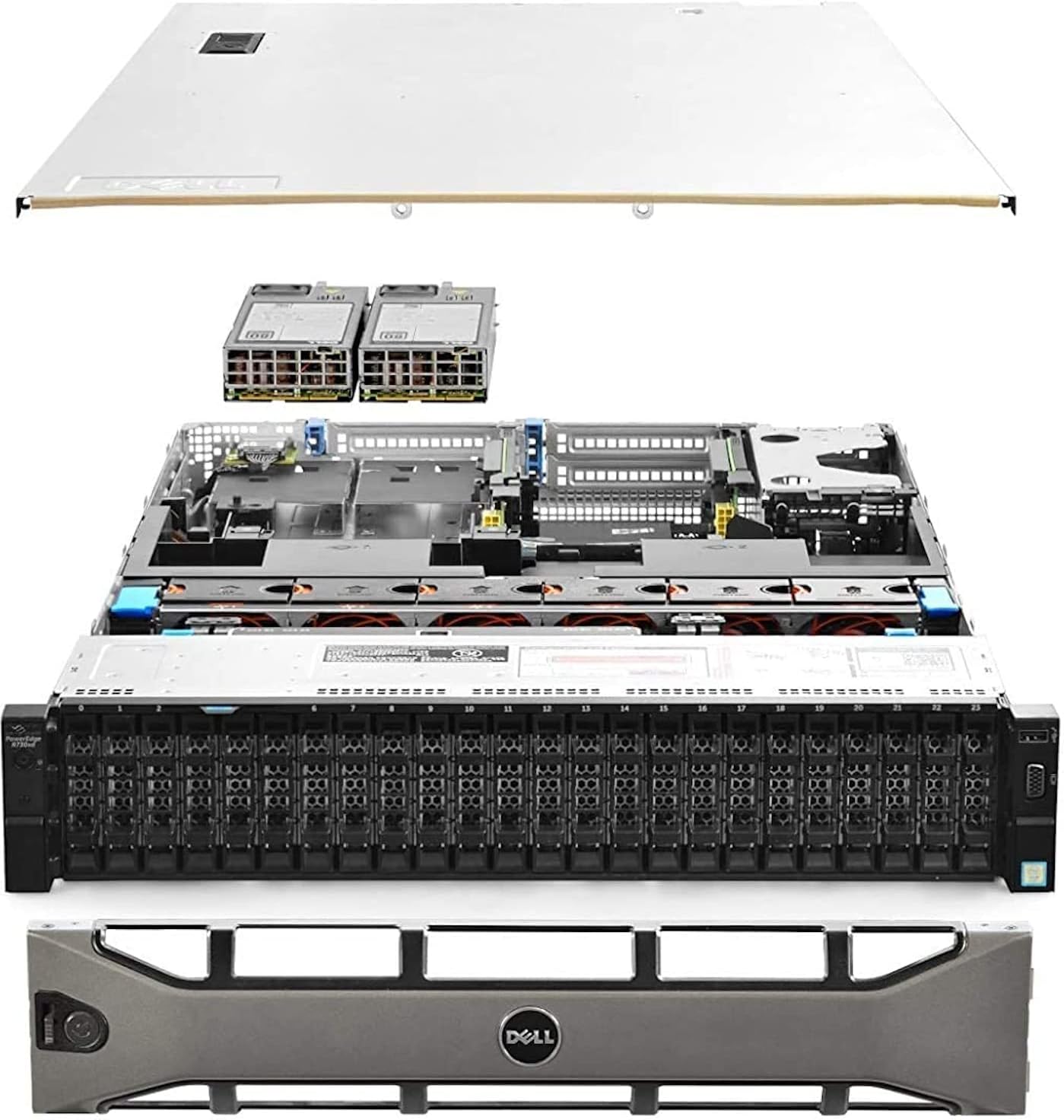
Dell PowerEdge R730xd Server 24B SFF 2U, 2X Intel Xeon E5-2690 v4 2.6Ghz (28-cores Total), 128GB DDR4 RAM, 4X 1.2TB 10K SAS 2.5” 12Gb/s HDD, H730P 2GB RAID, NIC 10Gb + I350 1Gb (Renewed)
1030.55
Compare Dell PowerEdge R730xd Against Others
After a thorough analysis, I conclude that the Dell PowerEdge R730XD is the superior investment due to its unmatched processing power, superior storage capacity, and flexibility in drive configuration. Its 24 cores and 12 drive trays make it an ideal choice for high-performance workloads, while its 128GB of RAM ensures efficient memory utilization. In contrast, the Dell PowerEdge R730xd, although offering high storage capacity, falls short in processing power and flexibility, making it less suitable for demanding workloads.
vsSpecs Pricing Dell R730xd 24b 2u B092snzg3v vs Hewlett Gen11 G7400 16gb B0d7zbzq8dThe Dell PowerEdge R730xd Server offers superior performance, scalability, and reliability compared to the Hewlett Packard Enterprise ProLiant MicroServer Gen11 Tower Server, making it the better investment for enterprises with demanding workloads. With its dual Intel Xeon E5-2690 v4 processors, 128GB DDR4 RAM, and 4x 1.2TB 10K SAS 2.5” 12Gb/s HDD, the Dell PowerEdge R730xd Server provides a robust foundation for high-performance computing, virtualization, and data-intensive applications.
vsSpecs Pricing Dell R730xd 24b 2u B092snzg3v vs Dell T7810 2x E5 B095trgcsxThe Dell PowerEdge R730xd (ASIN: B092SNZG3V) is the superior investment for enterprise-grade workloads, offering a purpose-built server platform with robust storage, networking, and management capabilities that the Dell T7810 (ASIN: B095TRGCSX) workstation lacks. While both systems share identical CPU and RAM configurations, the R730xd’s enterprise-class features—including dual 10Gb NICs, RAID controller, hot-swappable drive bays, redundant PSUs, and iDRAC8 management—make it a production-ready platform for virtualization, databases, or storage-heavy applications. The T7810, marketed as a 'Chia Farming' workstation, is a repurposed desktop chassis with no server-grade reliability, limited expansion flexibility, and a history of shipping damage and component mismatches in refurbished units. The R730xd’s $1,499 price point is justified by its enterprise pedigree, whereas the T7810’s $1,230 price reflects its consumer-grade limitations and the risks inherent in refurbished workstations with inconsistent seller quality.
vsSpecs Pricing Dell R730xd 24b 2u B092snzg3v vs Gmktec I9 13900hk 14c B0dws75tpqThe Dell PowerEdge R730xd is the clear superior investment for enterprise-grade workloads requiring reliability, scalability, and performance, while the GMKtec Mini PC is a compelling value for consumer or light business use. The R730xd’s dual Xeon E5-2690 v4 processors (28 cores total), 128GB DDR4 RAM, and enterprise-class RAID controller (H730P) with 10Gb networking deliver unmatched raw compute power and storage throughput for virtualization, databases, or heavy workloads. In contrast, the GMKtec Mini PC’s single i9-13900HK (14C/20T) and 32GB DDR5 RAM, though modern, are constrained by its miniaturized form factor, limited expandability, and consumer-grade components. The R730xd’s 2U rackmount design, redundant 750W PSUs, and iDRAC8 management outclass the GMKtec’s compact, single-PSU, no-ECC memory solution. For mission-critical enterprise deployments, the R730xd’s proven architecture, thermal headroom, and Dell’s enterprise support ecosystem make it the only defensible choice. The GMKtec excels only in scenarios where space, power efficiency, and cost per watt are paramount—such as home offices or embedded systems—but even then, its lack of ECC RAM and limited I/O expandability introduce long-term reliability risks.
vsSpecs Pricing Dell R730xd 24b 2u B092snzg3v vs Hewlett Gen11 16gb 180w B0dpgms4gwThe Dell PowerEdge R730xd is the clear superior investment for any serious compute or storage workload, delivering enterprise-grade performance, scalability, and reliability that the HPE ProLiant MicroServer Gen11 cannot match. With 28 cores of Xeon E5-2690 v4 processing power, 128GB of DDR4 RAM, and four 1.2TB 10K SAS drives backed by a H730P RAID controller, the R730xd is engineered for high-intensity virtualization, database operations, or mixed workloads. The MicroServer Gen11, while modern in its Xeon E-2414 and DDR5 support, is crippled by its single-core design, lack of internal storage, and limited expansion—making it suitable only for trivial or niche tasks like a home lab or basic file server. The R730xd’s dual 10Gb NICs, 750W redundant PSUs, and iDRAC8 management further underscore its enterprise pedigree, whereas the MicroServer’s 180W external PSU and integrated graphics highlight its consumer-grade limitations. The price premium of the R730xd is justified by its raw capability and longevity, while the MicroServer’s cost savings are offset by its severe performance and scalability constraints.
vsSpecs Pricing Dell R730xd 24b 2u B092snzg3v vs Poweredge R730xd 2x E5 B097z3wbf3The Dell PowerEdge R730xd Server with 2X Intel Xeon E5-2690 v4 2.6Ghz and 128GB DDR4 RAM is the superior investment due to its higher core count, faster processor speed, and larger storage capacity, making it ideal for demanding workloads such as virtualization, database management, and high-performance computing. In contrast, the PowerEdge Dell R730XD Server with 2X E5-2640 v4 and 32GB RAM is better suited for smaller-scale applications and enterprises with limited budgets.
As an Amazon Associate we earn from qualifying purchases. Disclosure